A property record that stays with the home
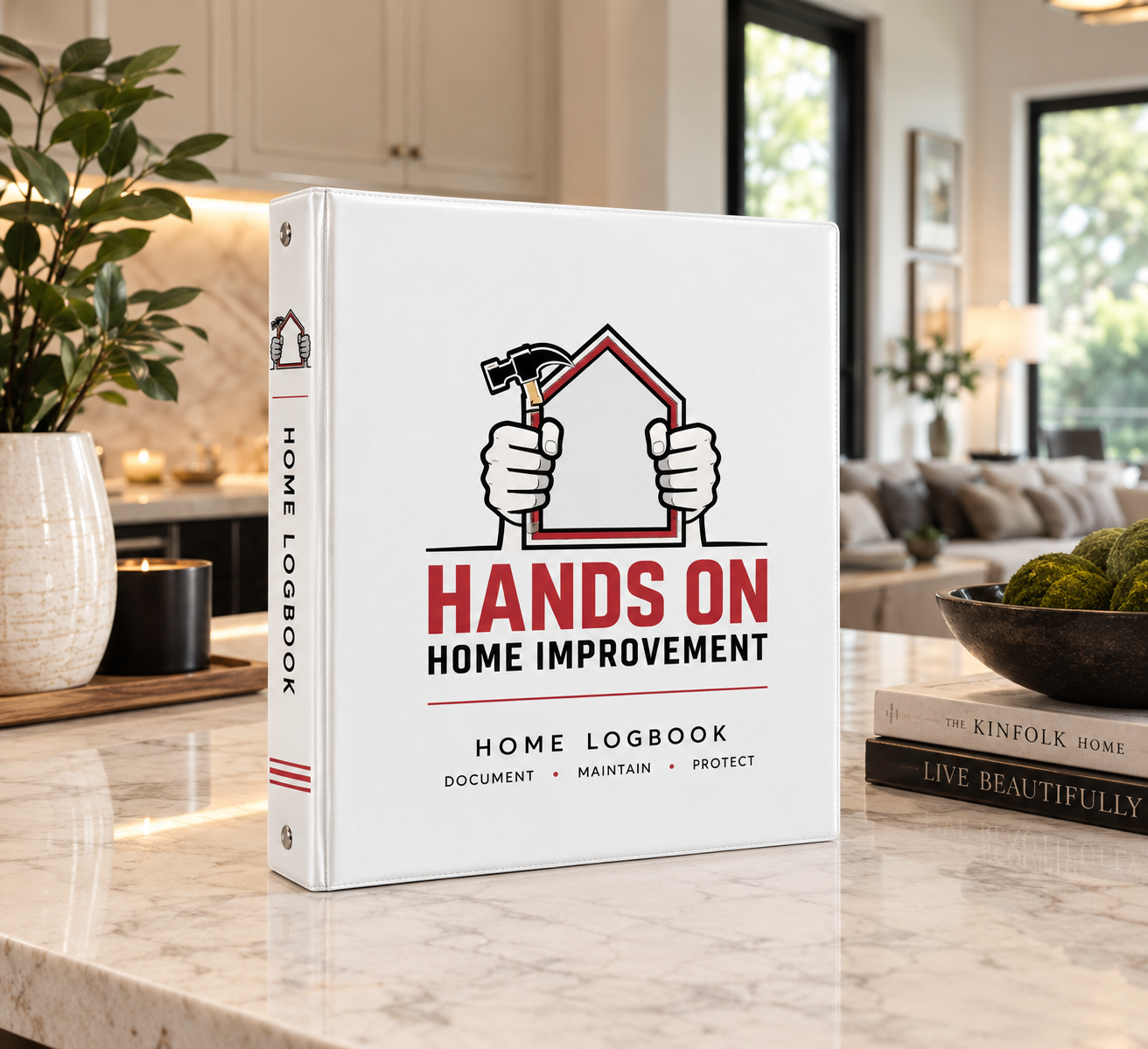
The Hands On Home Logbook
The Hands On Home Logbook is a permanent, running record of a specific property — the work completed on it, the equipment installed in it and the details a homeowner would otherwise have to remember on their own.
How the Logbook actually happens
It is not a product, an app or a subscription. It is the by-product of the same company doing the work more than once, in this order:
- Service — Hands On comes out and does the work you asked for: a repair, an installation, a punch list.
- Knowledge — while the fixture is off the ceiling or the panel is open, details get noticed and written down: what is installed, how it is wired, what condition it is in.
- History — those notes stay attached to the property instead of leaving with the invoice, building into a record of what has been done and when.
- A better next visit — the following job starts with that record, so less time is spent rediscovering the house and decisions are made with what came before in view.
That last step is the whole point. It is also why the value grows the longer the relationship lasts — the first visit is ordinary good work, and the fifth is informed by four visits worth of knowing the property.
Why does a home need a logbook at all?
Because most homes don't have one. Information about a house accumulates the moment it's built and keeps accumulating for as long as anyone owns it — but almost none of it ends up in one place. It lives in old invoices, a contractor's text thread, a previous owner's memory, or nowhere at all.
A homeowner might remember that the water heater was replaced "a few years ago," but not the brand, the capacity or whether it's still under warranty. A previous owner might have rerouted a circuit or swapped a fixture without leaving any note behind. None of that is unusual — it's simply what happens when nobody is responsible for writing it down. The Home Logbook exists to be the place where it gets written down.
What actually goes into a Home Logbook?
A Logbook entry is built around specifics, not general impressions. Over time it can include:
- Completed work, including what was repaired, replaced or installed and when
- Equipment model and serial numbers for HVAC, water heaters and major appliances
- Consumable specifics like air filter sizes and replacement intervals
- Paint colors, finishes and materials used in each room
- The location of the main water shutoff, electrical panel and other critical access points
- Warranty coverage and the dates it starts and ends
- Observations worth watching, even when nothing needs fixing yet
- Future improvements a homeowner has mentioned wanting to make
None of it is theoretical or generic. It's tied to the actual fixtures, systems and decisions in one specific house.
Why does this matter more than it seems to?
Because home knowledge is fragile. It scatters across people and paperwork while an owner lives in a house, and much of it is gone by the time the house is sold. A new owner often inherits a working house and very little of the history behind it — no clear picture of what was changed, why, or what to expect next.
A home without a record forces every owner to start from zero. A home with one lets each owner build on what came before it.
That gap shows up in small, frustrating ways: not knowing which breaker controls which room, not knowing why a light switch does nothing, or discovering a leak behind a wall that someone already knew about years earlier and never wrote down. Read more about why homeowners lose track of repairs and improvements in the first place.
How does a homeowner actually get a Home Logbook started?
By working with Hands On. There's no separate application or account to set up — the Logbook is built out of the real work already happening in your home. When Hands On completes a repair, installation or improvement, the relevant details can be added: what was done, what was found, and what's worth keeping an eye on going forward.
The more a homeowner works with Hands On over time, the more complete the picture becomes. A single visit gives you one entry. A continuing relationship gives you a real history — the kind that's genuinely useful when something goes wrong, when you're planning the next project, or when you eventually decide to sell.
What does the Logbook mean for the next owner?
It means they don't start blind. A home sold with a Logbook gives its next owner a documented starting point — what's been done, what's still under warranty, and what to plan for — instead of the usual guesswork that comes with buying a house. It's the kind of detail described in what information should stay with a house when it's sold, made concrete and specific to one property.
If you're curious how much of this your own home already has documented somewhere, or how much has already been lost, it's worth taking stock — see how well do you know your home.
What is the Hands On Home Logbook?
The Hands On Home Logbook is a property record kept for a home rather than for a single job — it collects completed work, equipment details, maintenance notes and observations so the information stays with the house over time, including for a future owner.
How do I get a Home Logbook for my house?
There is no signup or download. A Logbook builds naturally as Hands On works in your home — each visit is an opportunity to record what was done and what was found, so the more you work with Hands On, the more complete it becomes.
Does the Logbook cost extra?
The Logbook isn't a separate product you purchase — it's how Hands On documents the work already being done in your home, so the information doesn't get lost the way it usually does.
What happens to the Logbook if I sell my house?
Because it's designed to stay with the home rather than with one owner, a Logbook can be handed off or referenced when a property changes hands, giving the next owner a head start instead of a blank slate.
Related pages
- How well do you know your home?
A few honest diagnostic questions before you assume the answer.
- HVAC information worth keeping
Model numbers, filter sizes and service history to record.
- What to record after work is done
A practical checklist for after any repair or installation.
- About Hands On Home Improvement
The approach behind knowing a home instead of closing tickets.
Ready to start your home's record?
Start with Hands On.
Send a photo of the current project and Hands On will help fold it into your home's ongoing history.